+86 18305395512 ( 0 )
 EN
EN
Elastic Folder vs Lever Arch File: Which One to Specify
Two folders for two different jobs
An elastic folder and a lever arch file both hold A4 paper, and buyers often treat them as interchangeable. They are not. An elastic folder is a light, closed folder with flaps held by an elastic band, built for carrying a thin stack between rooms. A lever arch file is a heavier, open file with a metal mechanism and a spine, built for standing on a shelf and holding a deep stack. Choosing between them is a question about capacity and travel, not about price.
The elastic folder vs lever arch file decision sorts quickly once a buyer names how much paper has to move and how far it has to go. This guide covers the two builds, the closure, the material and the use cases where each one wins.
The elastic folder: light, closed, portable
An elastic folder - also sold as a 3-flap folder or an elasticated folder - is a folded board or poly sheet with three flaps that close over the paper and an elastic band that holds them shut. The folder carries a thin stack, usually a set of documents for a meeting, and closes flat so it slides into a bag.
The elastic folder is the right pick where the paper has to travel. A sales rep carrying a proposal, a student carrying a term of notes, a clinic carrying patient files between rooms - all of these want a folder that closes and does not spill. Because it is light and flat, a stack of elastic folders takes little shelf space and packs cheaply for export.
The trade-off is capacity and durability. An elastic folder holds a modest stack and the board softens with heavy use, so it suits a working folder rather than a permanent archive.
The lever arch file: heavy, open, archival
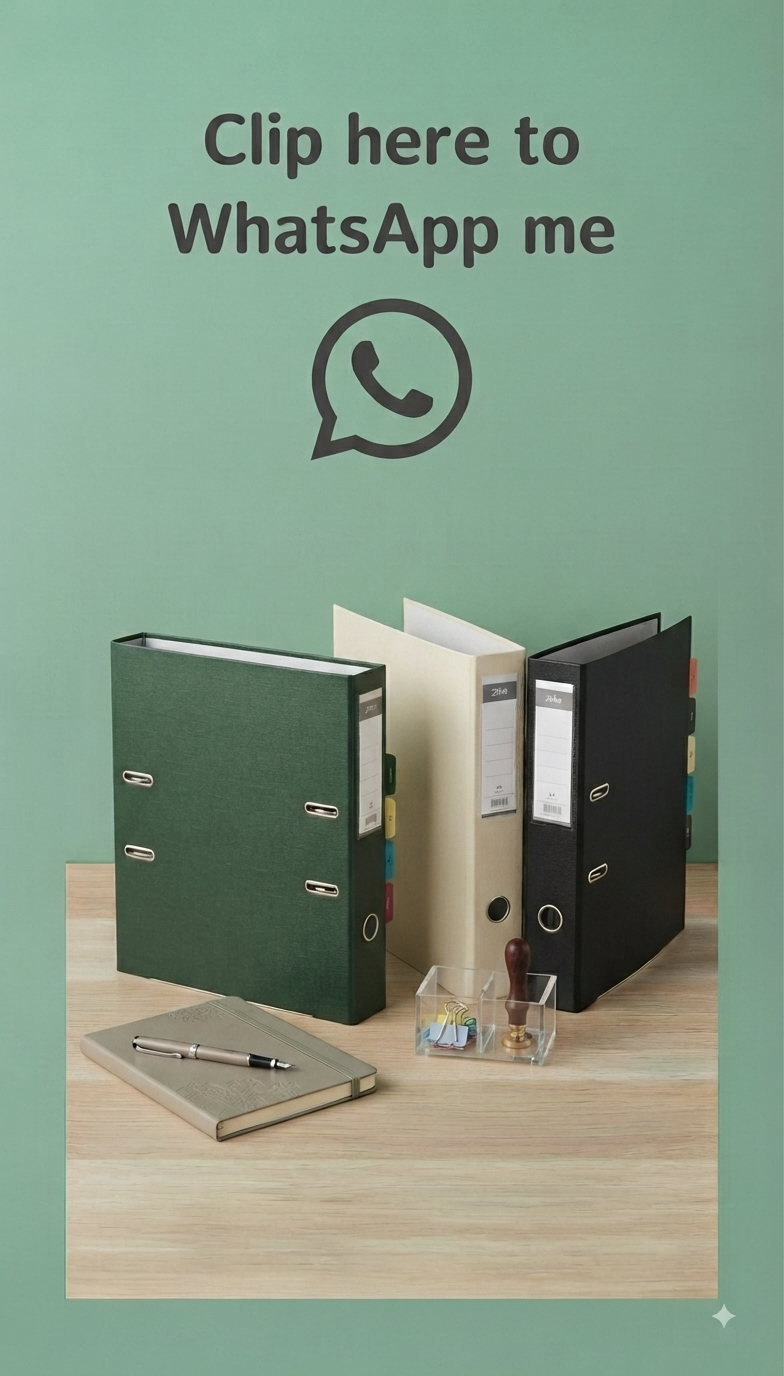
A lever arch file is a rigid file with a metal arch mechanism that opens and closes on a lever, a spine that takes a label and a set of finger holes for pulling it off a shelf. The file holds a deep stack, often several hundred sheets, and stands upright on a shelf between its neighbours.
The lever arch file is the right pick where paper has to be kept. A client file that grows over a year, a set of accounts that has to stand in a cabinet, a catalogue that is referenced for months - these want a lever arch file. The mechanism holds the pages in order and the spine carries the label, so the file reads on a shelf without being opened.
The trade-off is bulk and weight. A lever arch file is heavier than an elastic folder, it does not close, and it is built to sit in one place rather than travel.
Capacity, closure and material
The capacity gap is the widest difference between the two. An elastic folder takes a thin stack, while a lever arch file takes a deep one, and the mechanism size sets the lever arch capacity. A buyer who needs both should not try to stretch one product into the other's job: a lever arch file used as a travel folder wastes weight, and an elastic folder used as an archive spills paper.
The closure is the second difference. An elastic folder is held shut by a band, which keeps the paper inside a bag and lets the folder open flat on a desk. A lever arch file is held by its mechanism and is not designed to close, so it stays open on the shelf.
The material is the third. An elastic folder commonly uses a folding board or a poly sheet, with a poly version for wet or rough handling. A lever arch file uses a rigid board with a paper or PVC cover, and the cover takes a print, a wood-grain laminate or a solid colour.
Which one to specify
Specify an elastic folder when the paper has to move: meeting documents, student notes, patient files, a proposal carried to a client. Specify a lever arch file when the paper has to stay: a growing client file, a set of accounts, a catalogue kept for reference.
Many buyers carry both, and the two can share a colour set and a cover print so the range reads as one family. A distributor that offers an elastic folder for the desk and a lever arch file for the shelf covers both halves of a filing order with one design language.
Sheet capacity in practice
A buyer comparing the two should think in stacks rather than sheets. An elastic folder takes a set of documents that a person carries in one hand, while a lever arch file takes a set that a person lifts with two. The elastic folder has a natural limit at the flap, which closes over a modest stack; once the stack stands proud of the flap, the band cannot hold it and the folder stops working.
A lever arch file has no such limit inside its mechanism range. The file that runs out of room is the one whose ring size is too small, and the answer there is a larger mechanism and a wider spine rather than a different product. That is why a buyer planning a filing range should size the lever arch mechanism to the thickest file the catalogue is likely to hold, and leave the elastic folder to the travel job it was built for.
How ZOKABS produces both
ZOKABS produces elastic folders in paper and poly with a three-flap closure and an elastic band, and lever arch files in board with paper, PVC and wood-grain covers. Both lines take a printed brand mark, and the lever arch range carries a spine label and a matching mechanism size.
For a wholesale folder order, ZOKABS lines up the folder type, the material, the closure and the print against the buyer's catalogue, then packs the range to a single carton and pallet plan. Send the folder type, the material preference and the order volume, and the factory will match the right build for the next order.
FAQ
Is an elastic folder the same as a lever arch file?
No. An elastic folder is a light, closed folder held by an elastic band for carrying a thin stack, while a lever arch file is a rigid, open file with a metal mechanism for holding a deep stack on a shelf.
How much paper does an elastic folder hold?
An elastic folder holds a thin stack, usually a set of documents for a meeting or a day of notes. A thicker set needs a lever arch file, a box file or an expanding file with a gusset.
Can an elastic folder be printed with a logo?
Yes. Both a paper elastic folder and a poly elastic folder take a printed brand mark on the front flap, and a poly version holds a print on a rough-handling folder better than a paper one.
Which folder is better for students?
An elastic folder suits students who carry notes between classes and want a light, closed folder. A lever arch file suits a term-long subject archive that lives on a shelf.
Tell ZOKABS the folder type, the material and the order volume, and the factory will line up the closure, the cover finish and a matching carton plan for the next order.
Subscribe for our latest Updates
Stay up to date with the latest news, announcement and articles.- Contact Us
- Daguanzhuang,Tancheng,Linyi,Shandong,China, 276111
- +86 18305395512
- Aria@zokabs.com
- Products
- Promotion File
- Clipboard
- Ring binder
- Lever arch file & Box file
- Expandable Storage Files
- Sheet Protector & L folder
- Poly & Paper Folders
- About us
- About us
- Company Technology