
+86 18305395512 ( 0 )
 EN
EN
Back to School Stationery Buyer's Guide: Building the Seasonal Range
Why back to school stationery is a different kind of order
Back to school stationery is the one part of the year when a stationery buyer has to commit early, buy deep and cover a lot of formats from one supplier. The season is short, the demand is concentrated, and a range that misses the window has to sit in the warehouse until the next year. For a B2B buyer the back to school stationery order is therefore less about a single product and more about a matched range that arrives on time, in the right pack, at a build the shelf can carry.
This guide covers the core range, the buying calendar, the print and pack side, and the markets where a back to school stationery range sells.
The core back to school stationery range
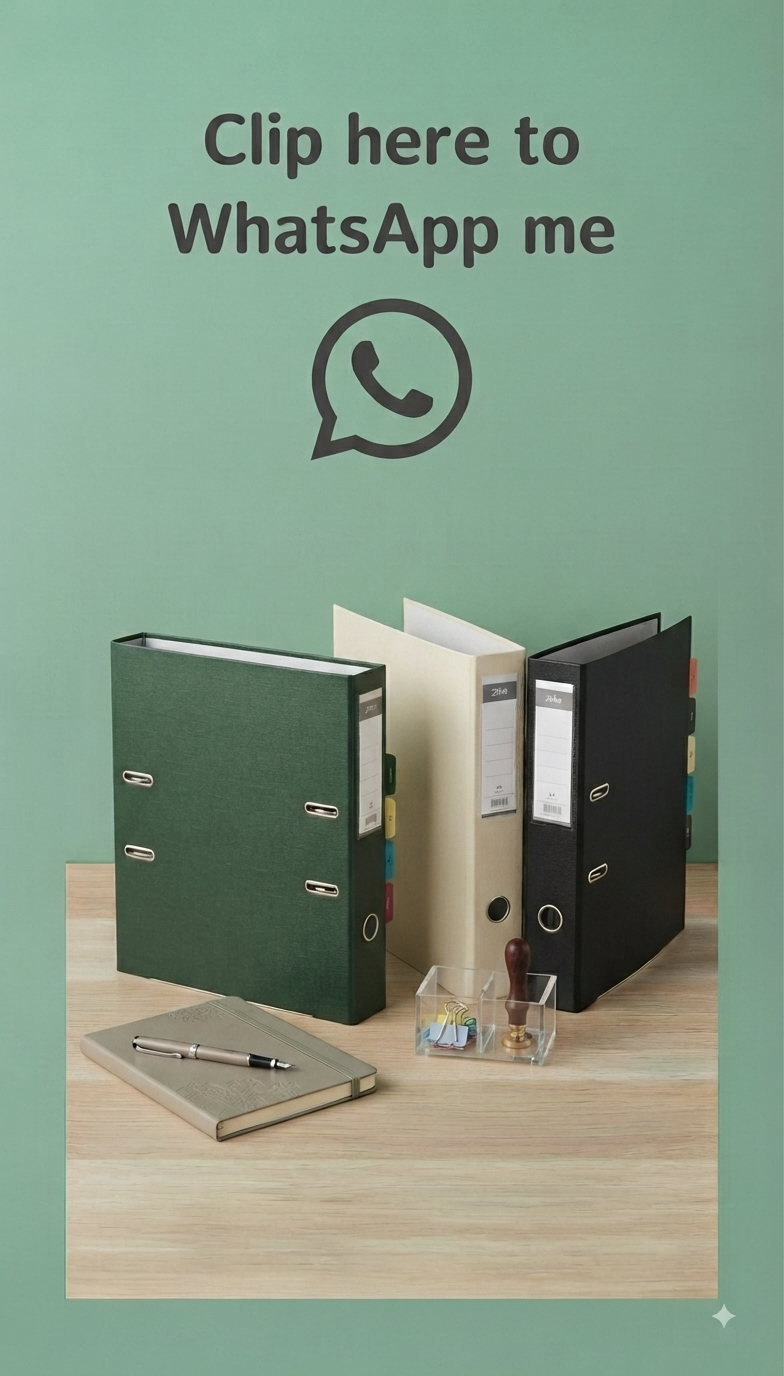
A back to school range is built from a handful of formats a student uses every day. Lever arch files and ring binders carry the term's notes, box files and document wallets hold the loose sheets, expanding files keep subjects apart, and clipboards, magazine files and display books cover the desk and the shelf. The range works when the formats share a colour set and a finish, so the shelf reads as one line rather than a pile of unrelated items.
A buyer usually builds the range around two or three hero formats and fills the rest with the supporting items. The hero format is the one the market buys most, and on a school account it is often the lever arch file or the ring binder, because those are the items a parent buys at the start of every term.
Timing and the buying calendar
Back to school stationery is bought months before it is sold. A wholesale buyer places the order in the quiet season so the goods clear production and shipping in time for the shelf, and a retailer wants the range in the warehouse well before the term starts. A buyer who settles the range with the factory early gets the production slot and the shipping window; one who leaves it late competes for capacity and pays for speed.
The calendar also decides the print. A school-branded order needs a proof and an approval before the run, and that adds a step a plain order does not have. A buyer who builds the proof into the plan keeps the schedule intact.
Print and the school-specific order
The back to school order often carries a print, whether it is a school name, a class colour or a retail brand. A printed lever arch file or ring binder turns a plain folder into a school-issue item, and a printed cover lets a school carry its own identity across the term's stationery. Because the print sits on the cover or the spine, it has to be settled with the format, not after it, so the design and the build are chosen together.
For a retail buyer the print carries the shop brand rather than the school's, and the design usually runs across the whole range so the shelf reads as one line. A buyer who prints the hero format and leaves the supporting items plain keeps the build simple while still carrying the brand.
Packs, cartons and the retail shelf
A back to school range is packed for the shelf. A student or a parent buys one or two files at a time, so a small retail pack sells better than a bulk carton on the shop floor, while a school account buys in the carton. A buyer can plan one product in two packs: a small retail pack for the shelf and a carton for the school and wholesale channel.
The carton plan is set with the range so the formats travel together. When the hero format and the supporting items share a pallet plan, a buyer can land a full range in one shipment instead of chasing several deliveries through the season.
Where back to school stationery sells
Back to school stationery sells through school suppliers, stationery wholesalers, supermarket and discount chains, and direct to schools and colleges. Each channel wants a slightly different range: a school supplier wants the full line with the printed covers, a discount chain wants the hero formats at a sharp entry build, and a school account wants a matched set in the school's own colours.
The common thread is the season. A buyer who covers several channels can run one matched range and vary the pack and the print by channel, which keeps the colour set shared across the whole order.
What to settle before the season opens
A back to school order runs on a few decisions that are hard to change once the run starts. The colour set, the print and the carton plan are the three that matter most, because each one is locked in at the factory and cannot be adjusted later without a new run. A buyer who settles all three before the season opens can reorder the same range the following year from the same reference.
The other point is the sample. A school or a retail buyer usually wants to see and approve a sample before the order is placed, so a buyer should build the sample round into the calendar rather than treat it as an extra. Getting the sample approved early keeps the production slot and the shipping window intact.
How ZOKABS builds a back to school range
ZOKABS builds back to school stationery across its folder range, from lever arch files and ring binders to box files, wallets, expanding files and clipboards, in a shared colour and finish so the range reads as one line. The print, the pack and the carton plan are set with the formats, so a mixed order lands as a coordinated delivery rather than a set of separate shipments.
FAQ
When should a buyer place a back to school stationery order?
Early. A wholesale or retail buyer places the order in the quiet season so production and shipping clear before the term starts, which also secures the production slot ahead of the seasonal rush.
Which formats sell best in a back to school range?
Lever arch files and ring binders are usually the hero formats because they carry the term's notes, with box files, wallets, expanding files and clipboards filling out the range.
Can back to school stationery be printed with a school name?
Yes. A printed cover or spine turns a plain folder into a school-issue item, and the print is settled with the format so the design and the build are chosen together.
Should the range be sold in packs or cartons?
Both. A small retail pack suits the shop shelf where a parent buys one or two files, and a carton suits a school or wholesale account that buys in volume.
Tell ZOKABS the formats, the colours, the print and the order volume, and the factory will line up the range, the packs and a matching carton plan for the next season.
Subscribe for our latest Updates
Stay up to date with the latest news, announcement and articles.- Contact Us
- Daguanzhuang,Tancheng,Linyi,Shandong,China, 276111
- +86 18305395512
- Aria@zokabs.com
- Products
- Promotion File
- Clipboard
- Ring binder
- Lever arch file & Box file
- Expandable Storage Files
- Sheet Protector & L folder
- Poly & Paper Folders
- About us
- About us
- Company Technology